Parking Areas That Prevent Liability Issues
Commercial Surface Cleaning in Evans for Properties With Petroleum Contamination and Slip Hazards
Oil stains spread across parking areas, algae slickness accumulates on shaded walkways, and embedded grime darkens loading zones on commercial properties throughout Evans. These contaminants create slip hazards, violate property maintenance codes, and accelerate concrete degradation when petroleum compounds penetrate porous surfaces. Cousins Pro Wash applies commercial-grade surface cleaning using high-pressure equipment rated for horizontal concrete treatment and degreasing agents formulated to emulsify petroleum deposits that standard pressure washing merely redistributes across wider areas.
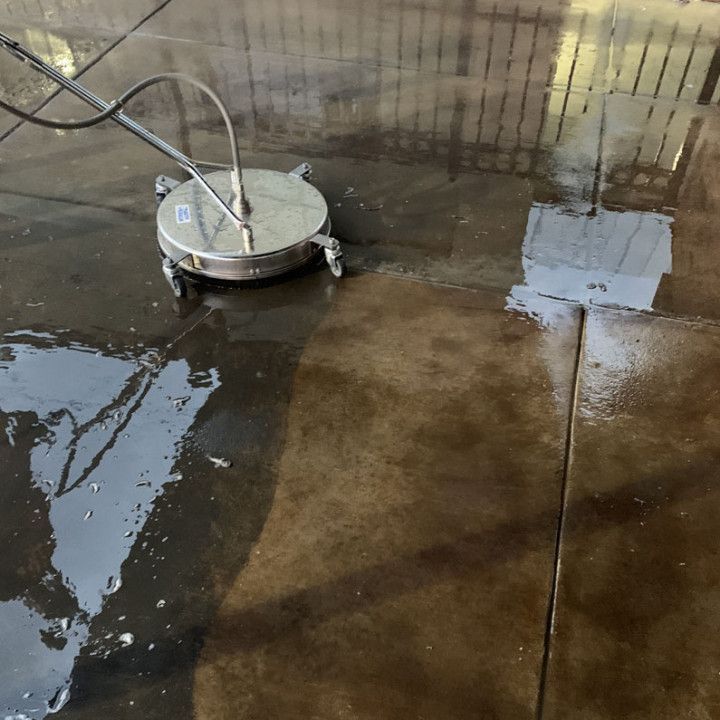
Commercial surface cleaning removes motor oil, hydraulic fluid, tire residue, organic growth, and industrial fallout from parking lots, loading docks, sidewalks, and entryways. The process combines heated water application that liquefies solidified grease, chemical degreasers that break petroleum-concrete bonds, and controlled high-pressure rinsing that lifts embedded contamination without pitting or spalling the concrete substrate. Proper technique addresses both surface staining and subsurface absorption that perpetuates odor and reappearance.
Arrange a site evaluation to assess contamination density and concrete condition across your commercial surfaces.
Why Commercial Surfaces Require Specialized Treatment
Commercial parking areas experience contamination volumes and traffic densities that residential driveways never encounter. Petroleum deposits penetrate concrete pores and oxidize into permanent staining when not addressed promptly, while organic growth on shaded walkways creates liability exposure from slip-and-fall incidents. Degreasing agents must emulsify oil at the molecular level rather than simply dispersing it, and pressure ratings must match concrete density to prevent surface erosion while achieving deep cleaning.
After treatment, parking surfaces no longer display the black tire marks that accumulate in drive lanes, loading zones lose the embedded grease that attracts additional dirt, and entryways eliminate the algae film that becomes slick during rain. Proper cleaning extends pavement lifespan by removing the petroleum compounds that accelerate freeze-thaw damage in concrete pores. The visual difference between treated and untreated sections becomes immediately obvious.
Commercial surface cleaning operates on weekday schedules to coordinate with business hours and minimize tenant disruption, though extensive contamination may justify off-hour work to maintain access. Project duration depends on total square footage and whether contamination requires multiple chemical applications for full remediation.
Commercial Surface Treatment Questions
Facility managers in Evans inquire about equipment capabilities, environmental compliance, and maintenance scheduling before authorizing commercial surface cleaning contracts.
How does commercial surface cleaning remove embedded oil stains?
Heated water liquefies solidified petroleum compounds while specialized degreasers break the molecular bonds between oil and concrete, followed by high-pressure rinsing that extracts contamination from porous substrate rather than spreading it across adjacent areas.
What pressure levels are required for commercial concrete cleaning?
Commercial equipment operates between 3000 and 4000 PSI to penetrate embedded contamination in high-traffic concrete, significantly higher than the soft washing pressures used on delicate residential siding or roofing materials in Evans.
When should commercial properties schedule surface cleaning?
You should schedule cleaning when oil staining becomes visible, when organic slickness appears on walkways, or quarterly as preventive maintenance to avoid permanent concrete degradation and liability exposure from slip hazards.
Why can't commercial surface cleaning use the same methods as residential driveways?
Commercial surfaces endure heavier contamination from constant vehicle traffic, larger petroleum deposits from fleet vehicles, and regulatory scrutiny that demands documented maintenance protocols beyond residential property standards.
What happens to contaminated runoff during commercial surface cleaning?
Proper containment captures petroleum-laden water for compliant disposal rather than allowing it to enter storm drains, and this environmental responsibility requires specialized equipment that basic pressure washing operations lack.
Cousins Pro Wash develops customized maintenance schedules based on your facility's traffic patterns and contamination accumulation rates. Contact us to arrange a comprehensive site assessment and receive surface-specific treatment recommendations for your commercial property needs.